Christmas Dancing Skeleton
A Designer’s First Impression: Playful, Not Precious
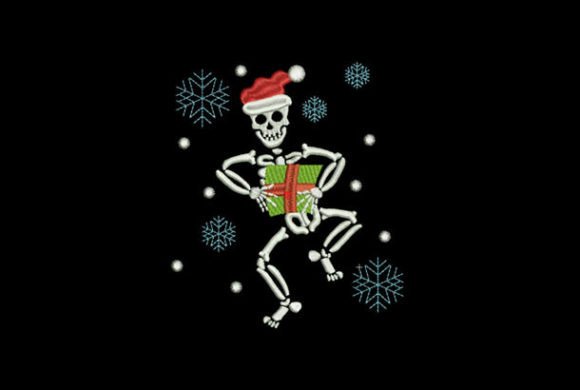
When I opened the Christmas Dancing Skeleton embroidery file, I didn’t see a cliché holiday motif—I saw rhythm. The pose is loose and joyful: one arm raised, knees bent, ribcage tilted like it’s mid-twist on a frosty porch. It’s not spooky or ironic—it’s genuinely cheerful, with clean lines and intentional negative space around the limbs. That breathing room matters. As a designer who’s stitched hundreds of holiday pieces for small shops and Etsy sellers, I know cluttered silhouettes drown in dense fill stitch or vanish on textured fabric. This one lands with clarity—even at 3.5 inches wide.
Where It Shines (and Where It Needs Thought)
I tested Christmas Dancing Skeleton on three real projects: a medium-weight organic cotton tote bag for a local boutique, a brushed cotton baby onesie, and a twill cap for a craft fair pop-up. Each revealed something different.
On the tote bag? Instant success. The design held crisp edges without excessive stitch density—no puckering, no thread breaks. The satin-stitched outline gave just enough definition to read clearly from across a market stall. Customers paused, smiled, and asked, “Is that *dancing*?” That kind of engagement is gold for handmade product visibility.
The onesie was trickier. Baby embroidery demands softness—both tactile and visual. Here, Christmas Dancing Skeleton worked beautifully *only* because the leg and arm contours avoided tight corners and micro-details. No tiny bones, no fussy shading—just confident shapes that translate well at small scale. I used a lightweight tear-away stabilizer and 40-weight poly thread; the result felt gentle against skin, not stiff or plasticky.
The cap? That’s where judgment kicked in. Curved surfaces exaggerate stitch pull, especially with bold outlines. I resized the design down to 2.75 inches and added an extra layer of cutaway stabilizer under the front panel. Even then, I recommend avoiding the very top crown unless you’re using a specialized cap hoop—the shoulders of the skeleton softened slightly there. Not a dealbreaker—but a note for apparel decorators stitching dozens of units.
Fabric & Function: What to Watch For
- Thin or stretchy fabric? Use a firm stabilizer base—Christmas Dancing Skeleton’s open silhouette relies on support to keep proportions true. Without it, the “dance” becomes saggy.
- Dark fabric? Test your thread colors carefully. A charcoal gray skeleton on navy can disappear unless you add subtle off-white highlights—or go bold with metallic silver thread in the outline.
- Textured towels or blankets? Keep it large (4+ inches) and avoid placing it over heavy terry loops. The design reads best on smoother weaves—think linen-blend tea towels or quilted pillow covers—not thick jacquard throws.
- Patches or layered garments? This isn’t an applique design, so don’t expect raw-edge charm. It’s built for clean, finished embroidery—ideal for sewn-on patches or directly embroidered sweatshirt fronts.
What It Adds to Your Craft Business
As an Etsy seller and small shop consultant, I look for designs that do double duty: they delight customers *and* reinforce brand trust. Christmas Dancing Skeleton delivers both. It feels handmade—not mass-produced—because its motion suggests intention, not algorithmic symmetry. When buyers see this on a personalized gift or boutique apron, they don’t think “generic holiday clipart.” They think “someone chose this *for me*.”
That perception lifts perceived value. A $28 embroidered sweatshirt with Christmas Dancing Skeleton on the chest sells faster—and with fewer returns—than one with a flat, static snowman. Why? Because movement implies care, personality, and attention to how the finished product lives in the world.
For digital product sellers: this is strong design assets material. Pair it with a simple “Happy Haunting Holidays” running stitch banner, and you’ve got a cohesive holiday collection. Just remember—confirm licensing before bundling into commercial embroidery packs or printable mockups.
Practical Designer Notes Before You Stitch
- Always test Christmas Dancing Skeleton on scrap fabric first—especially if using metallic or variegated thread.
- Check stitch density in the torso area. If it feels overly packed, reduce fill stitch percentage by 5–10% for breathability on apparel.
- Confirm hoop size compatibility. Its widest point dictates minimum hoop clearance—don’t force it into a 4x4 if the design spans 4.2 inches.
- Inspect small details in your embroidery software: are the fingers distinct? Does the grin hold shape at 3 inches? Zoom in—you’ll spot what might blur on fabric.
- Run a black-and-white mockup. Contrast reveals whether the silhouette holds up on dark garments or low-light gifting boxes.
- Use proper stabilizer—not just for hold, but for drape. A stiff cap or rigid tote loses its appeal if the embroidery fights the fabric’s natural hand.
- Verify commercial use rights. Since this is a machine embroidery design intended for finished products, confirm whether resale of embroidered items is permitted before listing on Etsy or at craft fairs.
Final Thought: A Design That Moves With You
Christmas Dancing Skeleton doesn’t shout “Christmas!”—it hums it, with a wink and a shuffle step. It’s versatile enough for a toddler’s onesie, sharp enough for a boutique sweatshirt, and distinctive enough to become a signature motif for your craft business. But its strength isn’t novelty—it’s execution. Clean lines, balanced weight, and thoughtful spacing mean it stitches reliably, photographs well, and wears gracefully. In a season full of rushed, overstuffed designs, that kind of restraint is rare—and valuable. Use it where joy needs to be visible, not explained.