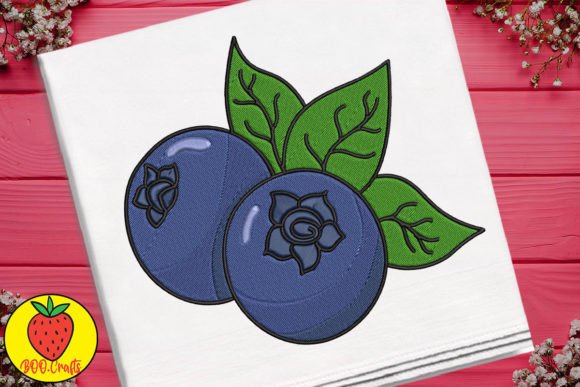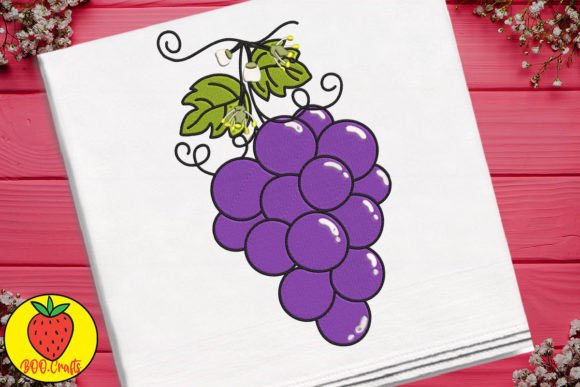
Cute Grapes and Leaves
First Impression: Sweet, Approachable, and Instantly Recognizable
As an embroidery designer who’s prepped over 200 craft fair booths, I can tell you Cute Grapes and Leaves lands exactly where it needs to: cheerful without being cutesy, botanical without being stiff, and food-themed without feeling gimmicky. It reads as soft modern farmhouse — think fresh market charm meets handmade warmth. That’s gold for craft fairs, where shoppers scan tables in under three seconds. No need for explanation or context: grapes = summer, abundance, freshness; leaves = natural, grounded, artisanal. It avoids the overly literal or cartoonish pitfalls common in food embroidery — no exaggerated eyes or winking fruit here. Just clean, friendly, and quietly confident.
Where It Shines: Craft Fair Product Pairings That Sell
Tote bags: A standout. The grape cluster works beautifully centered on a natural canvas or oat linen tote — large enough to read from six feet away, but balanced enough not to overwhelm. As a craft fair product, it invites touch and conversation (“Oh, are those Concord grapes?” “Did you grow these?”).
Aprons and tea towel embroidery: Perfect scale and rhythm. On a chef-style apron, it anchors the chest pocket area with gentle visual weight. On a flour-sack or waffle-weave tea towel, it adds personality without competing with functional texture. Customers consistently reach for embroidered kitchen textiles — and Cute Grapes and Leaves feels both useful and giftable.
Embroidered patches and fabric pouches: Highly versatile. As a sew-on patch, it adds instant charm to denim jackets or market bags. On a drawstring cotton pouch (think gift wrap or snack storage), it elevates a simple item into a small shop product with intention.
Pillow covers and caps: Works best at medium scale (4–5 inches wide). On a linen pillow cover, it reads as curated and cozy. On a structured cap, test placement carefully — the leaf flow should follow the curve of the front panel, not fight it.
What Holds It Back (And How to Fix It)
This isn’t a one-size-fits-all design — and that’s okay. Its strength is in thoughtful application, not blanket coverage. Here’s what demands attention before batch production:
- Dense stitch areas: Grape clusters often pack tight satin stitches. On textured towels or thick canvas, that density can pucker or flatten. Always use cutaway stabilizer + test on scrap first.
- Small leaf details: Delicate tendrils or vein lines may blur on dark fabric or low-thread-count cotton. Confirm contrast — light thread on navy? Try ecru or mint instead of stark white.
- Curved surfaces: Caps and small pouches compress design spacing. Run a printable mockup scaled to your hoop size to check if leaves distort or grapes bunch unnaturally.
- Scale sensitivity: Below 3 inches wide, some subtle shaping in the leaves may vanish. Avoid using Cute Grapes and Leaves as a tiny accent on cuff edges or tag labels unless the file includes a simplified variant.
Real-World Selling Power: Booth Impact & Buyer Engagement
In my booth last spring, I displayed Cute Grapes and Leaves across five items: a cream linen apron, a set of two tea towels (one folded, one draped), a mini market bag, a patch sampler board, and a framed embroidered pillow cover. It was the *only* food-themed design that drew consistent double-takes — not because it shouted, but because it felt intentional, cohesive, and human-made. Buyers didn’t say “cute grapes” — they said “fresh,” “summer picnic,” “my farmer’s market tote,” “perfect for my wine club.” That emotional resonance is what turns a glance into a sale.
For Etsy sellers and digital shops, this design photographs cleanly. Natural lighting shows off thread sheen and dimensionality. Use a printable mockup with warm wood or marble backgrounds — it leans into its organic, premium vibe without needing props.
Production Notes Every Embroidery Designer Should Check
Before cutting your first production run, do these six things:
- Test the machine embroidery design on scrap fabric matching your final product (e.g., terry cloth for towels, twill for caps).
- Verify thread colors against your fabric swatches — especially greens and purples, which shift dramatically under different lighting.
- Review spacing between grapes and leaves. Tight crowding kills breathability; too much gap weakens cohesion.
- Confirm hoop size compatibility. If your embroidery machine requires re-hooping mid-design, assess whether the leaf flow survives the seam.
- Inspect stitch density in the grape bodies. Over 12,000 stitches in a 4-inch area? Add tear-away to cutaway stabilizer blend.
- Create at least one real finished product — not just a hoop sample. Drape it, fold it, hold it at arm’s length. Does it still feel balanced?
Final Thought: A Strategic, Not Just Stylistic, Choice
Cute Grapes and Leaves isn’t just another digital embroidery file. It’s a quiet brand builder. It reinforces handmade quality through thoughtful proportion and natural flow. It strengthens booth display cohesion when paired with complementary designs (think olive branches or figs — not apples or carrots). And for Etsy sellers and boutique makers, it signals taste: not trend-chasing, but seasonally rooted and commercially aware. Just remember — like any great food motif, its value multiplies when served fresh, well-prepared, and thoughtfully presented. Before listing it as a commercial embroidery offering or stitching it onto 50 tote bags, revisit the description: “It will look great on shirts, aprons, hats, canvas, towels, and more.” That “and more” is your invitation — not to scatter it everywhere, but to choose where it belongs most.